Case Study — Evidence Sourced

The Seakeeper Genesis Event

A Seakeeper SK2 marine stabilizer — installed during vessel production under Seakeeper’s dealer/OEM program — experienced severe corrosion and system degradation within approximately 18 months of service. The condition was determined not to be covered under warranty. A systems integrator solved the problem, developed a methodology, and relied on it. Then a sequence of events resulted in the loss of the business. All statements below are sourced from public court filings and authenticated evidence.

<18 mo
Time to severe corrosion and system degradation
DENIED
Seakeeper warranty claim — determined not covered
$2.4M+
Accounts receivable + stranded inventory following termination
17,764
Bates-stamped evidence documents in the record

1. The Product Failure (May 2022)

In May 2022, a Seakeeper SK2 gyroscopic stabilizer installed in a 2020 Cobia 330 DC during vessel production under Seakeeper’s dealer/OEM program experienced severe corrosion and system degradation within approximately 18 months of service.

The condition was subsequently determined not to be covered under warranty. The proposed resolution included participation in a discounted trade-in program — not repair, not replacement.

The vessel owner threatened litigation against Seakeeper, the installing dealer, and all involved parties. That threat created the circumstance that brought CJS (Starboard Yacht Group) into the picture.

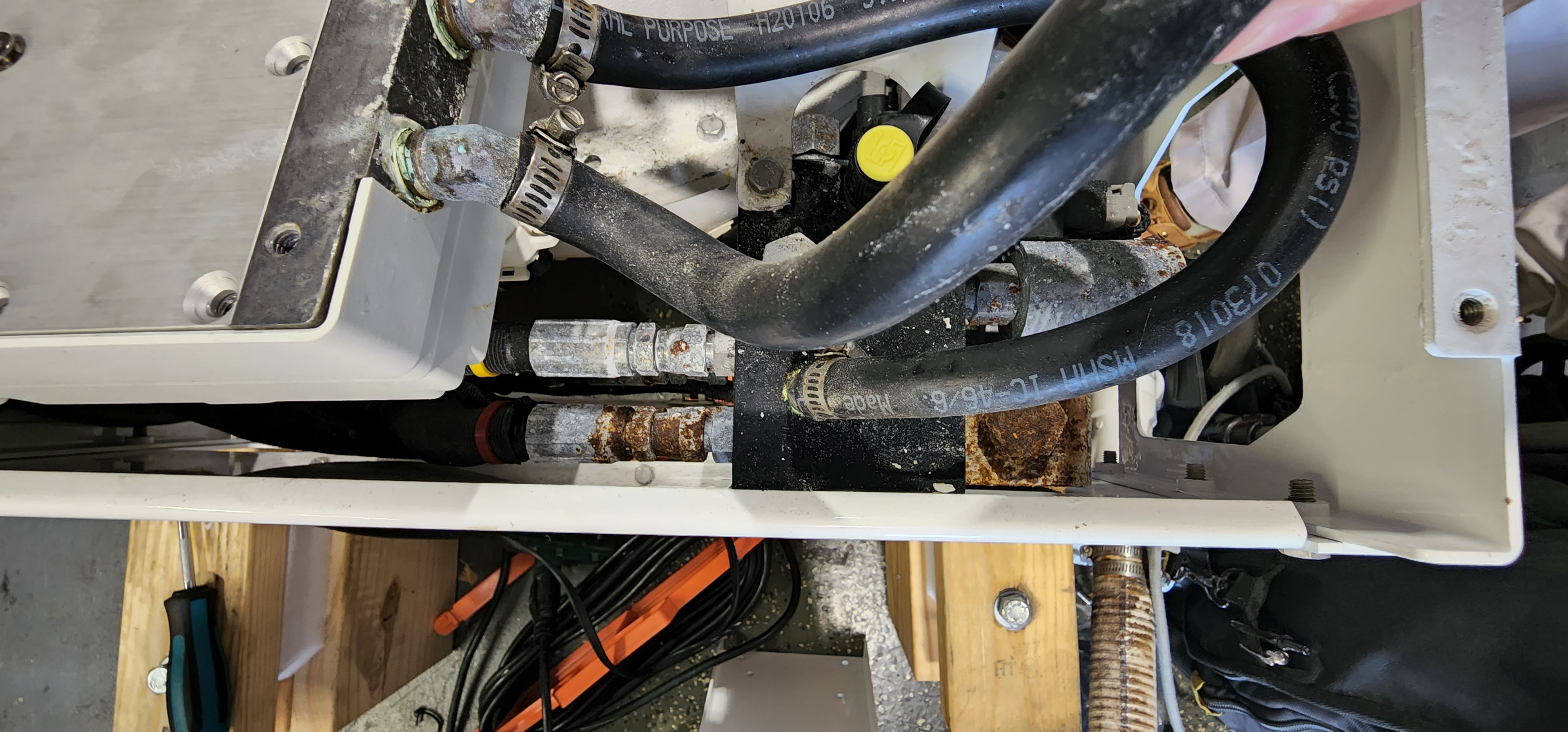
Seakeeper SK2 corroded pipe fittings — installed during vessel production, under 18 months service, May 2022
Evidence Photo 1: Corroded pipe fittings beneath SK2 unit installed during vessel production. May 3, 2022. CJS personal documentation.
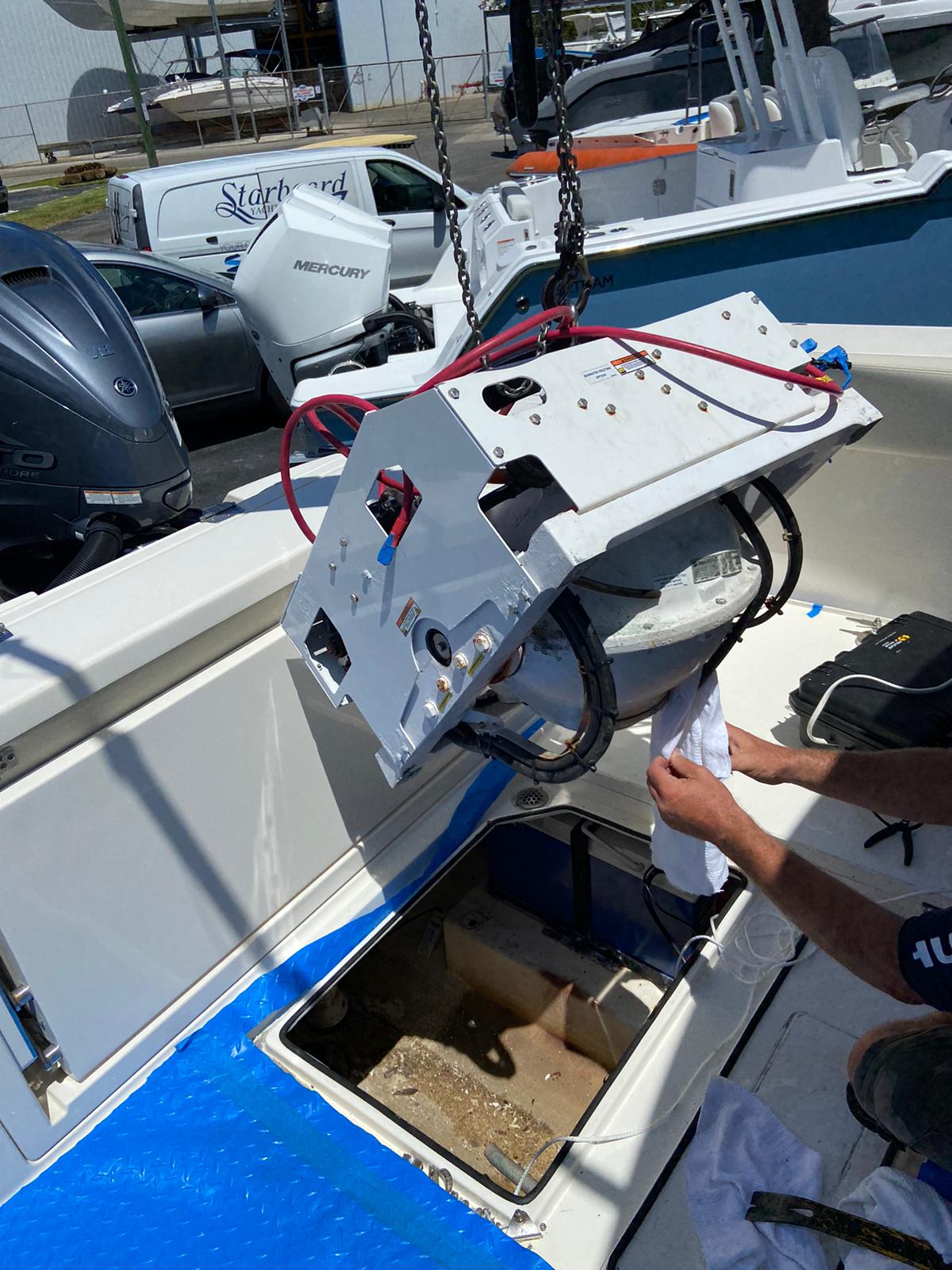
Seakeeper SK2 unit being crane-removed from Cobia 33 DC at Starboard Yacht Group — less than 21 months old, warranty claim denied
Evidence Photo 2: SK2 unit being crane-removed from Cobia 33 DC at Starboard Yacht Group (signage visible). Less than 21 months old. Warranty claim determined not covered. April 25, 2022.
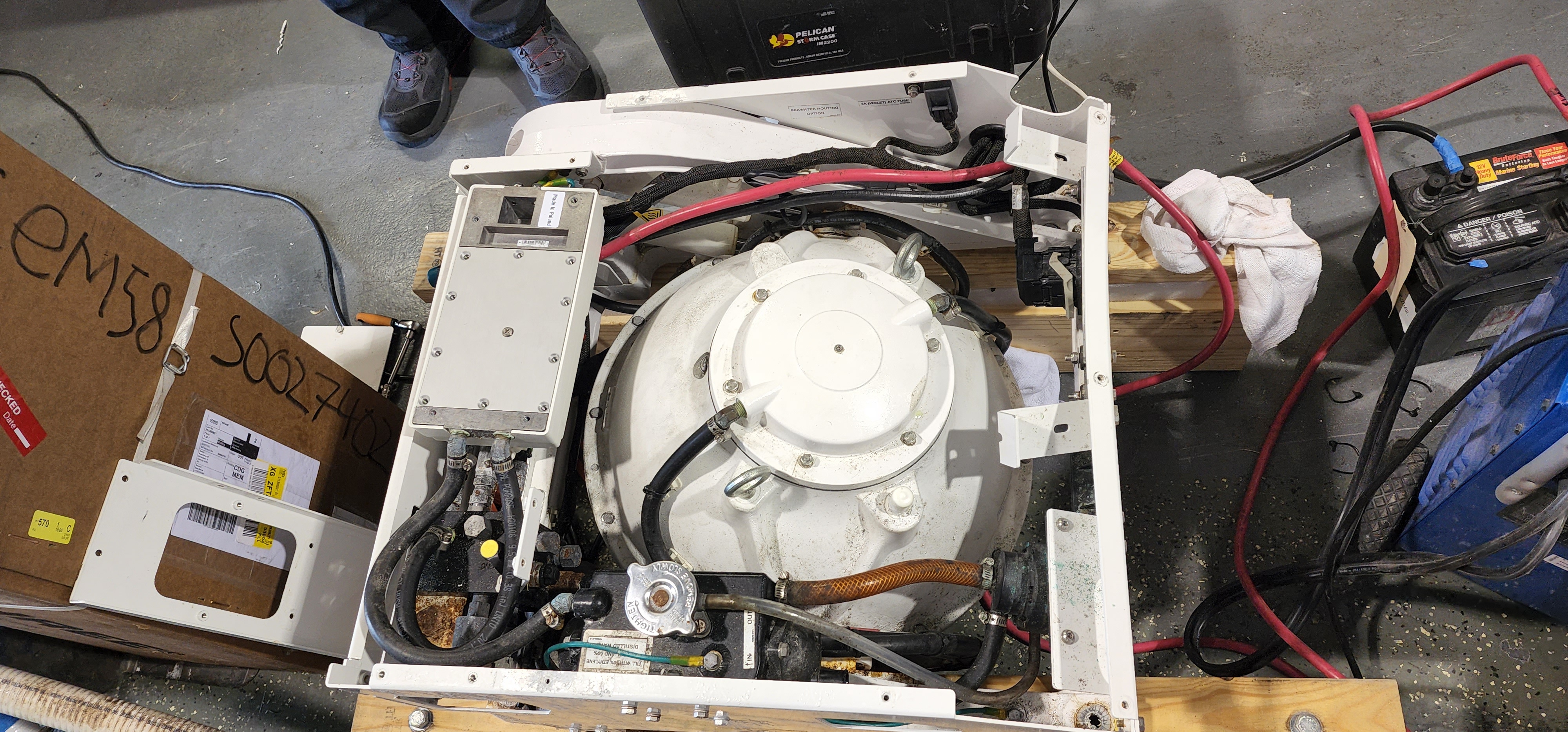
Removed Seakeeper SK2 unit on pallet with serial number visible — removed at under 21 months
Evidence Photo 3: SK2 unit on pallet after removal. Serial number visible. SYG subsequently re-engineered the vessel with Humphree interceptors — the systems integration methodology at issue.

2. The SYG Solution — Systems Integration

CJS was brought in to solve the problem. What was performed was not a simple unit swap. The failure was diagnosed at its root: placement geometry, ventilation pathways, and saltwater exposure patterns in the specific hull configuration.

The corrective solution re-engineered the system: integrating the Seakeeper gyroscopic stabilizer with Humphree interceptor ride control systems, adjusting placement based on vessel dynamics, weight distribution, and real-world operating conditions.

The result: the vessel was restored and its performance improved beyond original OEM specification.

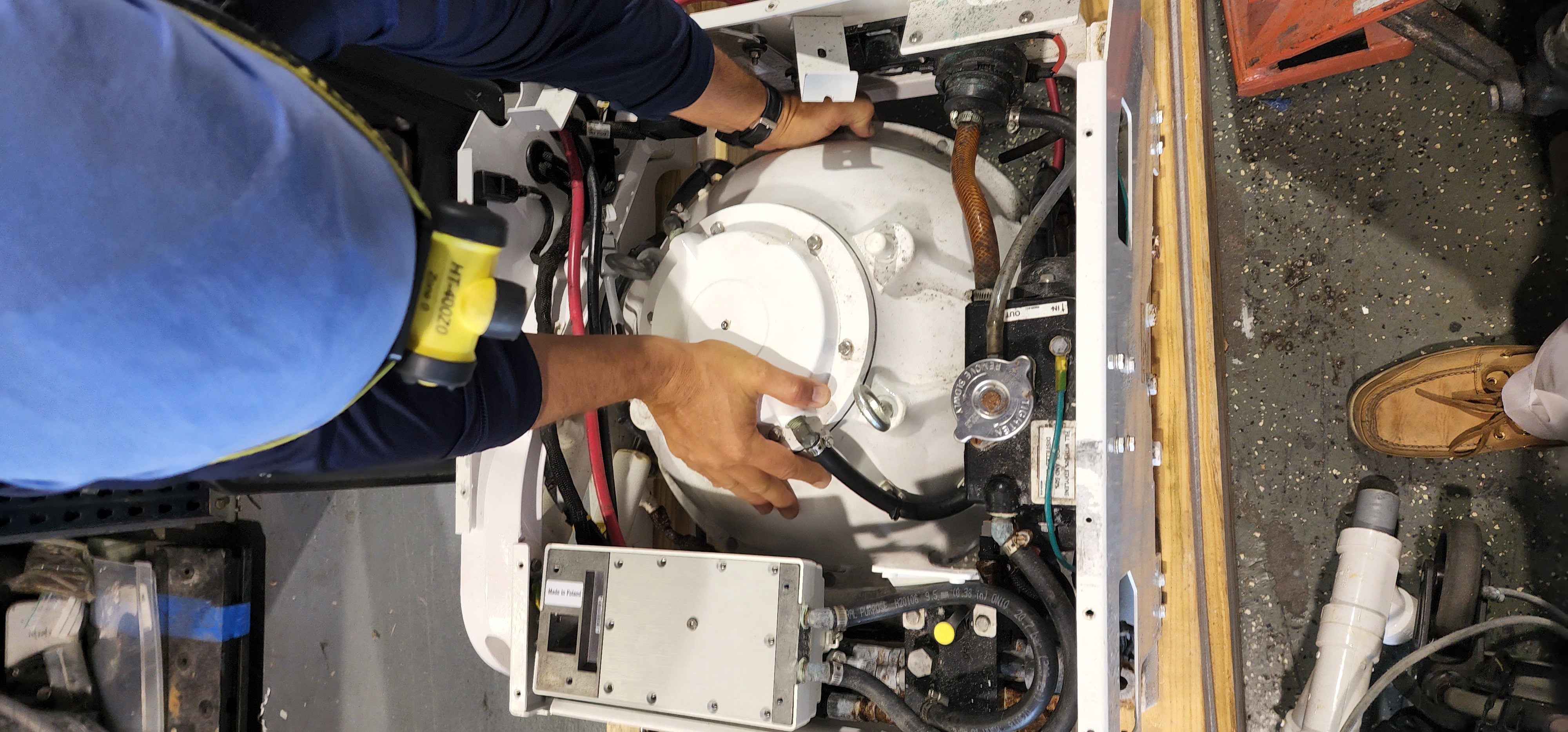
CJS performing diagnostic and corrective work on Seakeeper SK2 unit — systems integration approach, May 2022
Evidence Photo 3: CJS performing diagnostic and corrective system integration. The methodology that solved the factory failure. May 3, 2022.
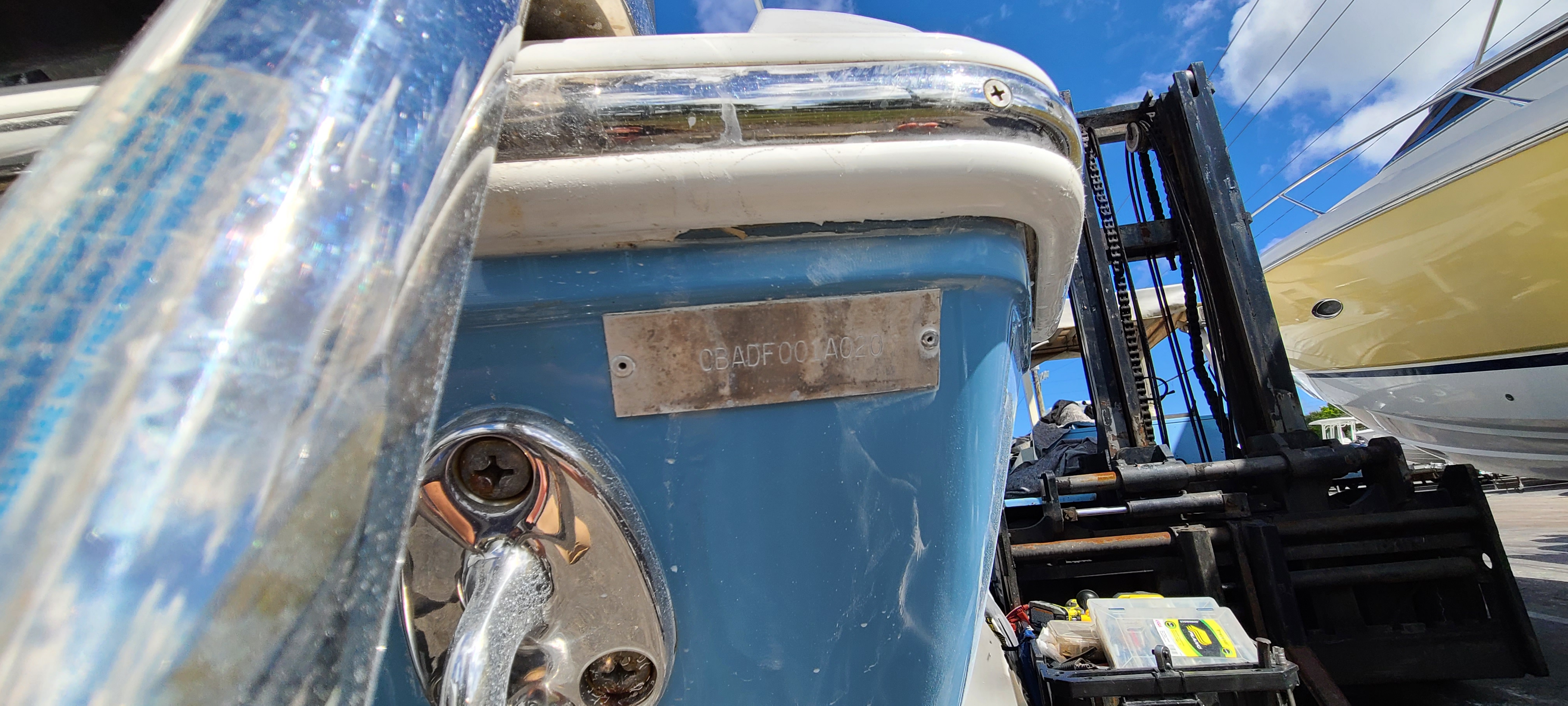
Cobia 330 DC HIN plate CBADF001A020 — vessel identification, Saint Tony LLC case vessel
Evidence Photo 4: Vessel HIN plate — CBADF001A020. Same vessel referenced in Saint Tony LLC v. Maverick Boat Group (1:22-cv-24183-JAL, S.D. Fla.). Feb 24, 2022.

3. The Methodology That Emerged

The performance-based integration approach — combining stabilization with ride control, engineering placement based on vessel-specific dynamics — was not invented after the fact. It was already part of how SYG operated. But this genesis event proved its value in a high-pressure, real-world failure scenario.

Following success, CJS continued operating based on this model: making inventory commitments, investing personal labor and capital into vessels built around this integration methodology. The result was $2.4 million in accounts receivable and approximately $850,000 in personal labor and capital tied directly to vessels that physically embody this approach.

“I was brought in to solve that problem. That solution worked. The evidence — the system configurations, the integration work, the physical implementation — is not just in documents. It is embedded in those vessels.”

— CJS, Oral Argument Prepared Statement (D. Md. 1:26-cv-01332-MJM)

4. The Subsequent Events

What followed was not a single event. The documented timeline shows a sequence of actions by multiple parties occurring in close temporal proximity:

Dec 2, 2024
Seakeeper sends dealer termination notice to SYG. Effective date: January 31, 2025. At this point, SYG had invested $1.8M+ in Seakeeper inventory (documented in Seakeeper’s own NetSuite records). SYG had also evolved beyond AC gyro installation — developing a proprietary DC marine energy storage product line (Sodium Ion battery systems: SALT START™) specifically designed to power next-generation DC vessel systems for Seakeeper’s DC-model gyroscopes (SK1 through SK4 — serving 21’ to 42’ center console vessels). This was SYG’s own intellectual property — not a Seakeeper product. The termination and subsequent enterprise actions destroyed SYG’s ability to bring this product to market.
Post-Termination
Stranded AC Inventory: Two Seakeeper AC-model units — a Seakeeper 35 (boat size 85’+, MSRP $309,300) and a Seakeeper 26 (boat size 70–85’, MSRP $255,800) — remain unsold. Combined MSRP: $565,100. Without dealer authorization, SYG cannot sell at full value and has been forced to discount 20% through third-party channels. These AC units represent the old product line — SYG’s actual innovation was the DC energy storage integration that would have made these gyros autonomous. The enterprise’s direct collaboration with Seakeeper prevented SYG from ever selling these units to the customers it had identified. Source: saltymarine.com (current listing).
Jan 31, 2025
Safe Harbor Marinas restricts facility access. SYG loses physical access to its vessels and workspace on the same date as the Seakeeper termination effective date.
Feb 2, 2026
Seacoast National Bank files vessel foreclosure (0:26-cv-60289-WPD). The vessels that physically embody the SYG methodology are now at risk of seizure and public sale.
Present
The vessels remain in default. The evidence — the physical implementation of the methodology — is at risk of destruction through sale to third parties who would disassemble and refit.

5. The Enterprise Pattern — M/V Octopussy

The same enterprise manager — Steven Ivankovich — who directed the Cobia transaction also managed the M/V Octopussy, a 100+ ft vessel equipped with three Seakeeper SK35 units (combined value: $574,000+). The Octopussy experienced the identical corrosion pattern:

Atos hydraulic solenoid valves — completely destroyed by corrosion. Seakeeper gyroscope mounting hardware — rusted through. Pipe fittings and cooling lines — corroded beyond operational use. The same product, the same failure mode, managed by the same person.

This is not an isolated incident on one vessel. The same corrosion pattern appears across multiple Seakeeper-equipped vessels, all connected to the same individual. Subsequent litigation was filed against the systems integrator who had resolved these failures.

Subsequent Events: All Point Boats prepared the M/V Octopussy for launch. SYG was not notified of the launch preparations despite having outstanding claims against the vessel. The vessel subsequently departed U.S. jurisdiction. The result: U.S. creditors lost access to the collateral.

The vessel represented over $850,000 in SYG labor and capital plus accounts receivable owed to multiple creditors. Its removal from U.S. jurisdiction eliminated the ability of creditors with legitimate claims to recover against this asset.

Atos hydraulic solenoid valves — completely corroded on M/V Octopussy SK35 installation
Evidence: Atos hydraulic solenoid valves on Octopussy SK35 system — severe corrosion. Same individual managed both vessels.
Close-up of destroyed Atos hydraulic components on M/V Octopussy Seakeeper SK35
Evidence: Detail view of Atos hydraulic system degradation. Components corroded beyond operational use.
Seakeeper SK35 unit with WARNING label visible and extensive corrosion on mounting bracket and pipes
Evidence: Seakeeper SK35 gyro unit (WARNING label visible) with corroded mounting hardware and pipe fittings. M/V Octopussy.
Seakeeper mounting bolt corroded through on M/V Octopussy
Evidence: Mounting bolt corroded completely through. Same individual managed both vessels.
Corroded pipes and marine growth visible through bilge access on M/V Octopussy
Evidence: Bilge access showing corroded pipes and marine growth around Seakeeper cooling system. M/V Octopussy.
M/V Octopussy on travel lift at Harbour Towne Marina — All Point Boats (APB) crew in white shirt visible
M/V Octopussy on travel lift at Harbour Towne Marina. All Point Boats (APB) crew in white shirt visible. APB and Seakeeper — same enterprise network, same manager: Steven Ivankovich.

“All Point Boats and Seakeeper both have Steven Ivankovich in common. The same individual who managed the Octopussy also directed the Cobia transaction. Both vessels experienced the same Seakeeper corrosion failure. Both resulted in litigation against SYG. The Octopussy subsequently left U.S. jurisdiction.”

— Documented across 20+ proceedings, multiple jurisdictions including DIFC Dubai

6. Why This Matters — Public Interest

This case study documents matters of public interest:

The Expertise Question: Seakeeper has argued in federal court (1:26-cv-01332-MJM) that SYG’s continued presence in the marine stabilization space “harms their brand” and “confuses” consumers who may believe SYG remains a certified dealer. The factual record tells a different story: SYG earned Seakeeper Dealer of the Year for the Americas (2021) and Humphree Dealer of the Year for the Americas — both awards recognizing the highest level of technical expertise, sales performance, and installation quality in the Western Hemisphere. A termination letter does not erase 30+ years of systems integration expertise. No party has a time machine. No court order can retroactively delete earned credentials. The public is served by having access to the actual experts — not by silencing them.

Product Safety: A marine stabilizer installed during vessel production experienced severe corrosion and system degradation within approximately 18 months in a saltwater environment — its intended operating context.

Consumer Protection: The manufacturer denied warranty coverage on a factory-installed product, offering only a discounted trade-in rather than repair or replacement.

Trade Secret Destruction: Vessels containing proprietary integration methodology are at risk of seizure and sale, which would destroy the physical evidence of the methods developed.

Aligned Timing: Termination, facility access restriction, and foreclosure occurred in sequence, involving separate corporate entities, all affecting the same party during the same time period.

The Real Confusion: The confusion Seakeeper complains of exists precisely because SYG is genuinely the expert. Consumers seek out SYG because of demonstrated competence — not because of a logo on a webpage. The solution to that “confusion” is not to silence the expert. It is to explain why the manufacturer terminated its best-performing dealer while simultaneously filing litigation 1,000 miles from home.

Related Court Proceedings

1:26-cv-01332-MJM
Seakeeper v. SYG — D. Maryland
0:26-cv-60289-WPD
Seacoast v. M/V Slow UR Roll II — S.D. Fla.
0:26-cv-61150-PAB
CJS v. Ivankovich et al. — RICO (S.D. Fla.)

The Evidence Speaks for Itself

If you are a creditor, former partner, or affected party in the Ivankovich enterprise pattern, your experience may be part of the documented record.

Register a Claim → View Full Litigation Pattern → Seakeeper Entity Profile →

Related Docketed Cases

Case 0:25-cv-61065-WPD
Vivere Adventures v. Starboard Yacht Group

The docketed facts behind the Seakeeper SK2 installation dispute — including the $25,000 wire transfer Seakeeper refused to fulfill, coordinated counsel withdrawal, and the default judgment entered during the holiday period.

Read the full record →
Helm Legal
Home — All Cases

Explore all documented cases, evidence exhibits, and docket timelines from Helm Legal's public record repository.

Browse all records →